
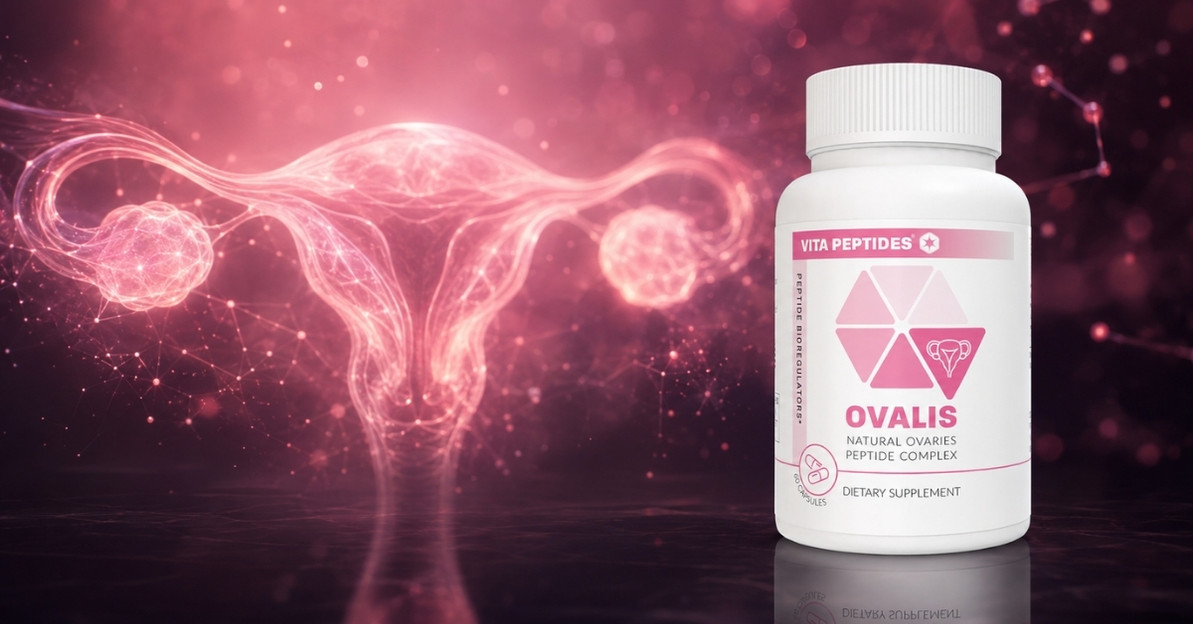
The Natural Ovary Peptide Bioregulator | Ovalis
The ovaries are small organs, but their influence reaches far beyond reproduction. Throughout a woman’s life, they participate in a carefully coordinated system that helps regulate ovulation, the menstrual cycle, reproductive development, and hormone production.
Ovarian activity also changes naturally with age. Supporting overall wellness through balanced nutrition, sufficient sleep, regular movement, stress management, and appropriate medical care becomes especially important as the body moves through different stages of life.
Ovalis is a natural ovaries peptide complex created to provide targeted nutritional support for ovarian tissue as part of a balanced women’s wellness routine.
What Are the Ovaries?
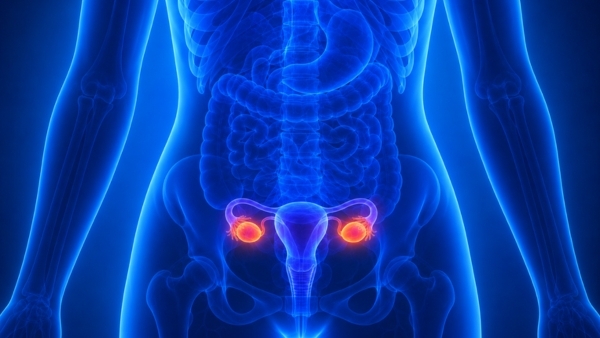
The ovaries are two small, oval shaped organs located on either side of the uterus. They are part of the female reproductive system and serve two principal roles: supporting the development of egg cells and producing hormones.
Each ovary consists of an outer region called the cortex and an inner region called the medulla. The cortex contains follicles at different stages of development. Each follicle surrounds an immature egg cell and provides the environment needed for its development. The medulla contains blood vessels, nerves, and connective tissue that help support the organ’s structure and activity.
This combination of reproductive and endocrine responsibilities makes the ovaries an important part of women’s health throughout life. The structure and physiology of ovarian tissue are described in detail by Endotext through the National Center for Biotechnology Information.
The Two Main Functions of the Ovaries
The ovaries have two closely connected functions: producing egg cells and releasing hormones.
Follicular development and ovulation
At the beginning of a menstrual cycle, a group of ovarian follicles may begin developing in response to hormonal signals. Typically, one follicle becomes dominant and continues toward maturity.
Around the middle of the cycle, a rise in luteinizing hormone helps initiate ovulation. During ovulation, the mature follicle releases an egg, which can then enter the fallopian tube.
After the egg is released, the remaining follicular structure becomes the corpus luteum. This temporary structure produces progesterone and supports the second half of the menstrual cycle.
Hormone production
The ovaries are also endocrine organs. They release hormones into the bloodstream, allowing ovarian signals to communicate with tissues throughout the body.
Estrogen and progesterone are two of the primary steroid hormones involved in regulating the female reproductive system. Their concentrations naturally rise and fall throughout the menstrual cycle. These hormonal patterns help coordinate follicular development, ovulation, and changes in the uterine lining.
A detailed overview of these processes is available in Physiology, Female Reproduction from StatPearls and NCBI Bookshelf.
Estrogen and Its Role in the Body
Estrogen is commonly associated with reproductive health, but its influence is broader. During the menstrual cycle, rising estrogen levels help support the growth of the uterine lining. Estrogen also participates in normal processes involving bone remodeling, cardiovascular function, skin, and several other tissues.
The ovaries produce estradiol, the primary form of estrogen during the reproductive years. Estrogen levels naturally fluctuate during the monthly cycle and change as a woman moves through puberty, the reproductive years, perimenopause, and menopause.
Because estrogen communicates with multiple tissues, ovarian hormone production is connected to many aspects of overall wellness.
Progesterone and the Second Half of the Cycle
Progesterone becomes especially important after ovulation. It is primarily produced by the corpus luteum during the second half of the menstrual cycle.
One of progesterone’s central roles is helping prepare and maintain the uterine lining for the possibility of pregnancy. If pregnancy does not occur, progesterone and estrogen levels decline, contributing to the beginning of a new menstrual period.
The coordinated movement of estrogen and progesterone throughout the cycle demonstrates how ovarian function depends on timing, communication, and balance among several organs.
The Ovaries, Hypothalamus, and Pituitary Gland
The ovaries do not work independently. Their activity is coordinated with the hypothalamus and pituitary gland through a communication network known as the hypothalamic pituitary ovarian axis.
The hypothalamus releases gonadotropin releasing hormone, commonly called GnRH. This signal encourages the pituitary gland to release follicle stimulating hormone and luteinizing hormone.
Follicle stimulating hormone supports follicular development, while luteinizing hormone participates in ovulation and corpus luteum formation. Hormones produced by the ovaries then provide feedback to the brain, helping regulate the timing and intensity of future signals.
This continuous feedback system helps organize the different phases of the menstrual cycle.
How Ovarian Function Changes Throughout Life
Ovarian activity is not the same at every age. Before puberty, the ovaries remain relatively inactive. During puberty, communication between the hypothalamus, pituitary gland, and ovaries becomes more active, leading to reproductive development and the establishment of menstrual cycles.
During the reproductive years, ovarian activity generally follows a repeating cycle. However, cycle length and individual experience may vary. Age, sleep, nutrition, stress, physical activity, energy intake, and general health can all influence the body systems involved in reproductive function.
The supply of ovarian follicles naturally declines over time. As menopause approaches, follicular activity and ovarian hormone production gradually change. This transition is a normal part of aging, although its timing and effects differ for every woman.
The National Institutes of Health provides additional information about current research into this stage of women’s health in its Menopause Research Overview.
What Are Peptides?
Peptides are short chains of amino acids, the same basic components the body uses to build proteins. They occur naturally throughout the body and participate in many kinds of biological communication.
The behavior of a peptide depends on its amino acid sequence, length, structure, concentration, and biological environment. For this reason, peptides are not all interchangeable. Research involving one peptide cannot automatically be applied to another peptide or peptide complex.
Scientists continue to investigate how certain short peptides interact with cellular processes. A published systematic review examined experimental research into peptide regulation of gene expression, while also showing that peptide effects depend on the specific peptide and study model. The research is available in Peptide Regulation of Gene Expression: A Systematic Review from Molecules.
What Are Peptide Bioregulator Complexes?
Peptide bioregulator complexes are formulated around the concept of tissue specific nutritional support. Different complexes are associated with different organs or tissues.
They should not be confused with hormones, hormone replacement therapy, fertility medications, or injectable pharmaceutical peptides. A dietary supplement does not replace substances the body produces, nor should it be treated as a substitute for medical care.
Peptide bioregulator supplements are intended to complement the foundations of wellness, including good nutrition, adequate sleep, regular physical activity, healthy stress management, and professional healthcare when needed.
What Is Ovalis?
Ovalis is a Vita Peptides dietary supplement formulated as a natural ovaries peptide complex. Its tissue-focused formula is intended to provide targeted nutritional support for ovarian tissue as part of a general women’s wellness routine.
Each bottle contains 60 capsules, providing a convenient oral format that can be incorporated into an established supplement plan.
What Does Targeted Nutritional Support Mean?
Targeted nutritional support means that a supplement is formulated with a particular organ or tissue in mind. In the case of Ovalis, that focus is ovarian tissue.
It does not mean that the supplement travels exclusively to one organ, replaces ovarian hormones, or changes a diagnosed medical condition.
This distinction is important because responsible supplement use begins with accurate expectations. Ovalis should be viewed as one component of a broader wellness routine rather than a replacement for healthy habits or professional care.
Building a Supportive Women’s Wellness Routine
The ovaries are part of a larger interconnected system. Supporting overall health therefore involves caring for the entire body.
A balanced diet supplies protein, essential fatty acids, vitamins, minerals, and other nutrients needed for normal cellular processes. Regular physical activity supports cardiovascular, muscular, skeletal, and metabolic health. Consistent sleep and stress management practices also help support the systems involved in hormonal communication.
Routine medical visits remain important at every stage of life. Anyone experiencing persistent pelvic discomfort, unusual bleeding, major changes in menstrual timing, or other reproductive health concerns should consult a qualified healthcare professional rather than relying on a supplement for an explanation or solution.
Women who are pregnant, nursing, trying to become pregnant, receiving fertility treatment, taking hormonal medication, or managing a medical condition should speak with a healthcare professional before using Ovalis or any new supplement.
A Focused Approach to Ovarian Wellness
The ovaries play an essential part in follicular development, ovulation, hormone production, and reproductive communication. Their activity changes naturally throughout life, reflecting the body’s ability to adapt from puberty through the reproductive years and into menopause.
Ovalis Natural Ovaries Peptide Complex provides an organ specific option for women interested in adding targeted ovarian nutritional support to a broader wellness routine.
The most thoughtful approach is to use Ovalis alongside balanced nutrition, healthy daily habits, regular medical care, and guidance from a qualified healthcare professional.
References
- Richards JS, Pangas SA. The Ovary: Basic Biology and Clinical Implications. Endotext, NCBI Bookshelf.
- Rosner J, Samardzic T, Sarao MS. Physiology, Female Reproduction. StatPearls, NCBI Bookshelf.
- National Institutes of Health. Menopause Research Overview.
- Khavinson V, Linkova N, Dyatlova A, Kuznik B, Umnov R. Peptide Regulation of Gene Expression: A Systematic Review. Molecules. 2021;26(22):7053.
*Disclaimer: These statements have not been evaluated by the FDA. This product is not intended to diagnose, treat, cure or prevent any disease. Information on this site is provided for informational purposes only and is not meant to substitute for the advice provided by your own physician or healthcare professional. You should not use the information contained herein for diagnosing or treating a health problem or disease, or prescribing medication.
Please note: You should always consult a primary care physician/health practitioner of choice when considering the use of any products for health purposes, especially when undergoing treatment for an existing condition.
Warning: Keep out of direct light. Do not contaminate or touch fluid in bottle. If you are pregnant, nursing, or taking any medication, consult your doctor before use. Discontinue use and consult doctor if any adverse reactions occur. Not intended for use by person under the age of 18. Keep out of reach of children. Store in a dry place and avoid excessive heat.
Recent Posts
-

Sigumir A-4 Natural Cartilage Peptide Bioregulator Guide
Cartilage supports nearly every movement made throughout the day. It helps joints move smoothly, cus …Oct 7th 2026 -

Ventfort A‑3 Blood Vessels Peptide Bioregulator Guide
Every organ and tissue depends on a continuous supply of oxygen and nutrients. The body delivers the …Oct 5th 2026 -

Thyreogen A‑2: A Closer Look at the Natural Thyroid Peptide Bioregulator
The thyroid may be small, but its influence extends throughout the body. Located at the front of the …Oct 2nd 2026